Skip to content
Uwiano Africa

Our work

Evidence first. Outreach tests. Policy scales.

The Vision Access Index guides our work. Screening days with county health teams help check its findings on the ground, while university partners help us test and improve the method. We use donated frames to reduce the cost of the glasses we fit.

Primary pillar

Research and policy

The Vision Access Index brings together county-level data on how many people have trouble seeing and how easily they can reach eye care. This helps health planners allocate staff and budgets using available data. We share our findings and recommendations in planning and policy discussions with county and national health decision-makers, so resources go where the need is greatest.

Severe difficulty seeing, per 100,000 people aged 5 and over

All 47 counties from highest to lowest, from the 2019 Kenya Population and Housing Census. The dashed line is the figure for Kenya.

The Vision Access Index

For each county, the Index shows where gaps in vision and in access to refractive eye care appear greatest. Health partners can use it to choose where to screen first and to see where more evidence or investment is needed.

How we keep it current

Each figure is checked against the report or table it came from, and we review the method with county health teams and academic partners. New datasets and screening results are added as they become available. We also include analytic dashboards for partners and county health teams to explore and contribute to the Index.

What it produces

  • Evidence briefs
  • County profiles
  • Policy recommendations
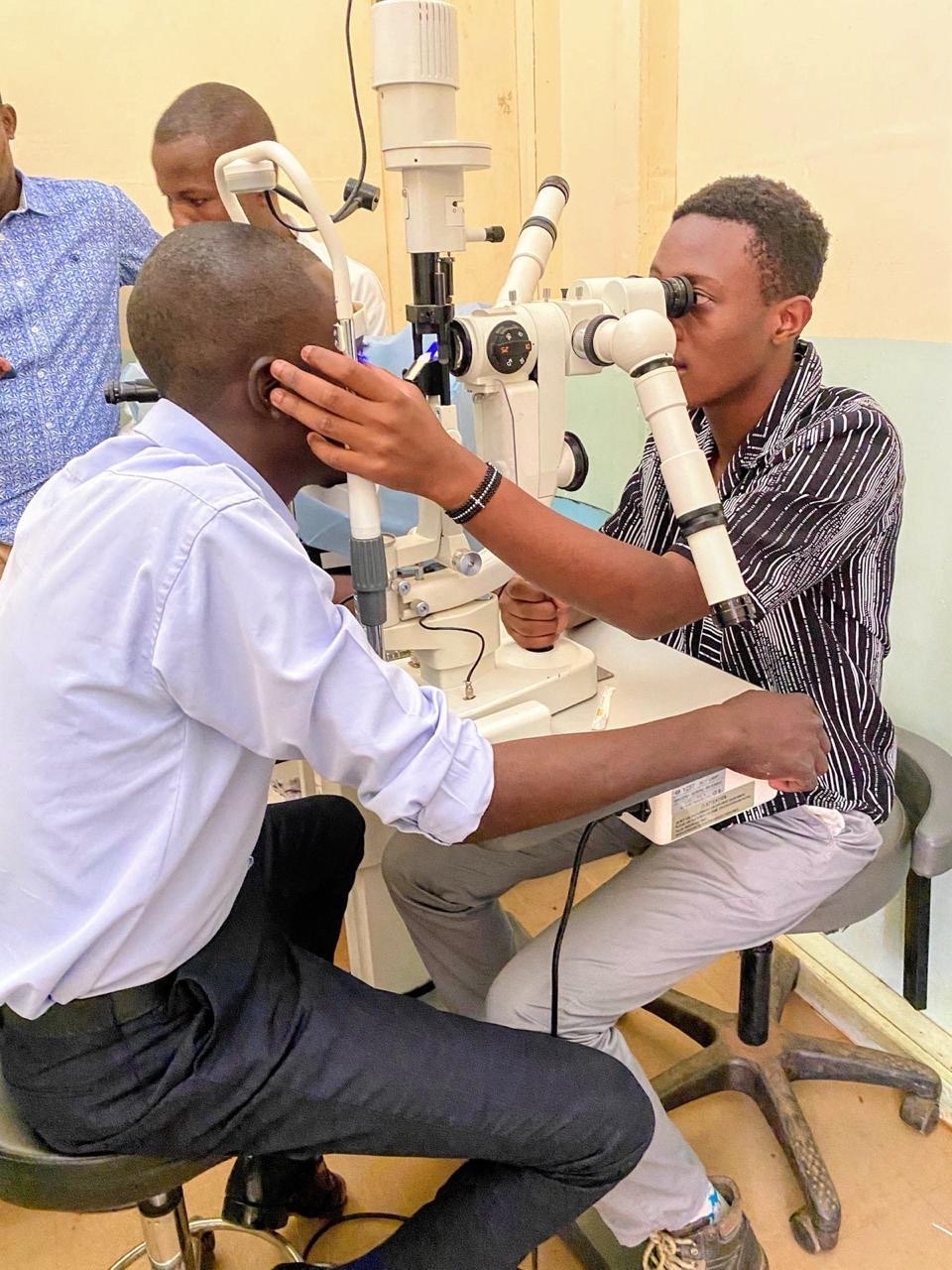
Abongo conducts a slit lamp examination on a student at the MMUST AVC Contact Lens Centre.

Supporting pillar

Academic partnerships

Improving eye care in Kenya takes people from several fields. We work with universities and training institutions in healthcare, engineering and data science to build research capacity and to test the Index against new data and field results.

Our screening days are designed as supervised clinical placement opportunities, where students:

  • examine patients under qualified supervisors, and learn to recognise refractive error and the early signs of other eye diseases
  • record screening results that go into the county data behind the Index

We also work with faculty to design and create publications and teaching materials informed by Kenyan data.

Supporting pillar

Clinical outreach

We plan each screening day with the county health team in locations we identify as underserved. The results go back to the county for planning and into the Index. Each day adds to the evidence and tests viable, scalable solutions.

  • Planned with county health teams
  • Run by qualified eye health professionals, with supervised students
  • Results shared with the county and added to the Index
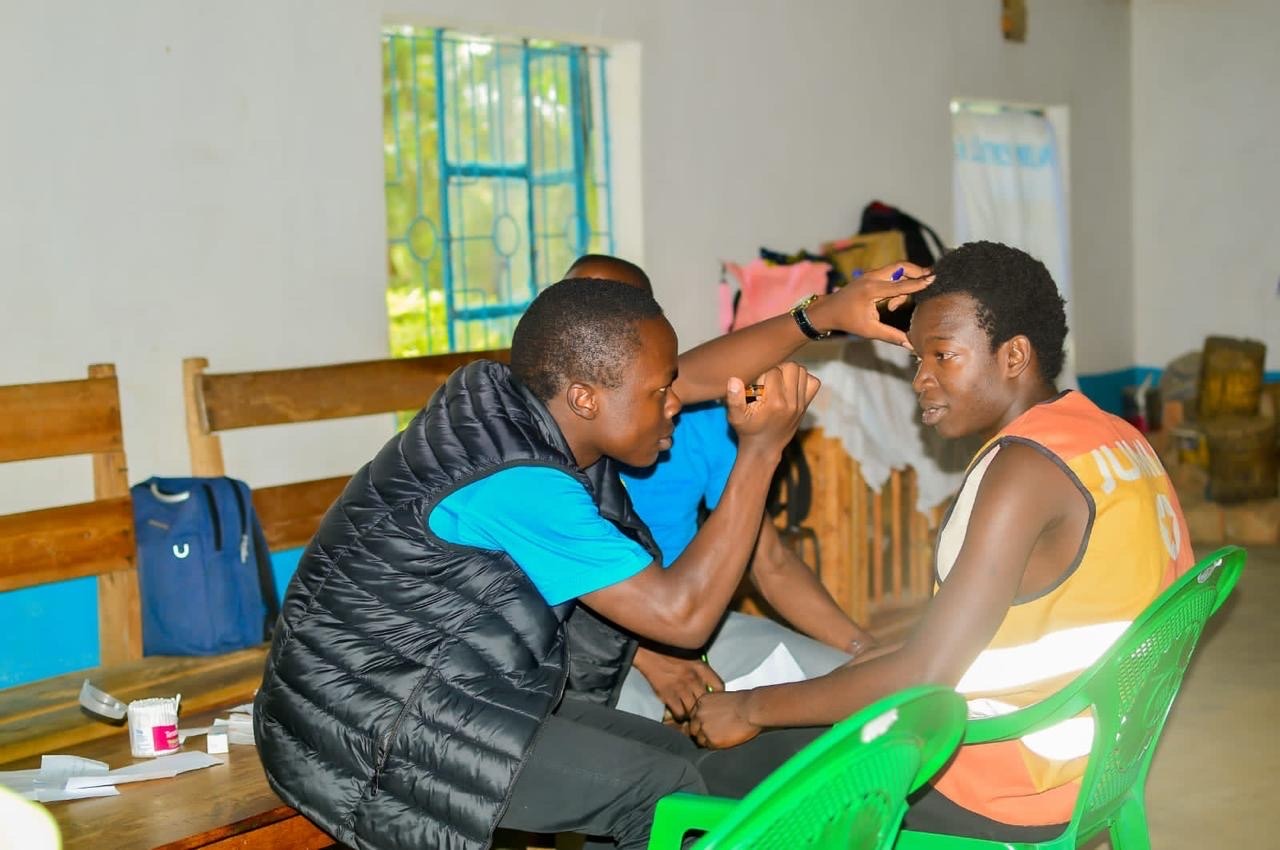
Alwenge Yimbo examines a patient during a community eye health screening in Shimanyiro, Kakamega County.

WHO SPECS 2030

Our alignment with the global target

The World Health Organization's SPECS 2030 initiative sets a global target to raise effective refractive error coverage by 40 percentage points by 2030. Our work follows its five areas: services, personnel, education, cost and surveillance.*

  1. Services

    Clinical outreach aimed at remote, marginalised and underserved communities.

  2. Personnel

    Through academic partnerships, we strive to build a trained workforce.

  3. Education

    We create public awareness through community outreach programmes and donation drives.

  4. Cost

    To lower the cost of glasses, we use refurbished donated frames.

  5. Surveillance

    The Vision Access Index measures coverage county by county, tracking county-level indicators of vision need and access.

    Our core contribution

*Uwiano Africa is independent and is not affiliated with WHO.
Cost

Donated frames

Frames are a large part of what a pair of glasses costs. We collect donated frames, clean and repair them, and fit new lenses to each person's prescription, which brings the price down.

How to donate frames

Updates

Evidence, field notes and news

Evidence briefs, reports from screening days, and news about the Vision Access Index.

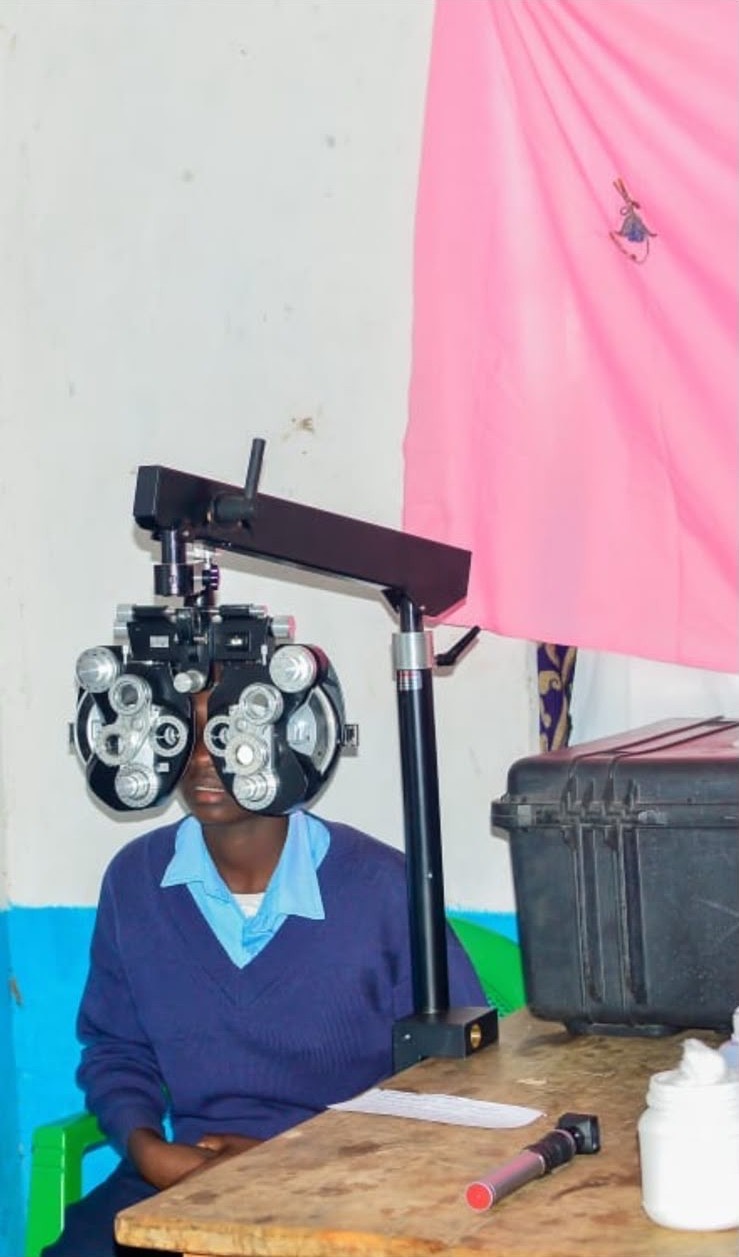
A student has an eye exam during a community eye health screening in Shimanyiro, Kakamega County.

Announcement, November 2026

Why we start with evidence

To close the gap in care, Kenya first needs to know which communities are being missed and why. The Vision Access Index sets this out county by county, and we develop it with the people who plan health services.