Skip to content
Uwiano Africa
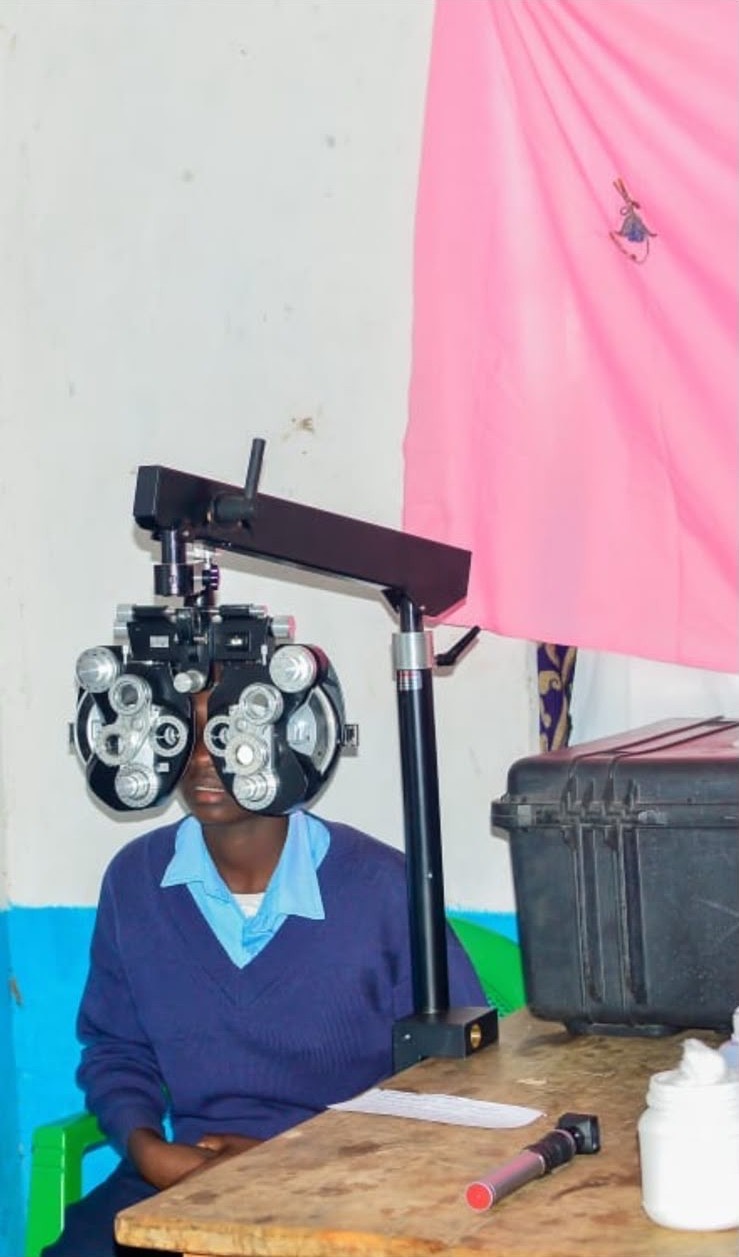
A student has an eye exam during a community eye health screening in Shimanyiro, Kakamega County.

A solvable vision problem, still affecting too many Kenyans.

Uncorrected refractive error is a leading cause of vision impairment. We use and continuously strengthen our Vision Access Index to map where correction is hardest to access, then turn that evidence into better planning and funding decisions.

The gap

Glasses work. Yet whether someone can see clearly still depends on where they live. What's missing is a way to reach everyone who needs them, and the county-level data to see who is being missed.

Delivery
Eye services cluster in a few urban centres. A child in a county far from the nearest clinic can go years without an eye test, and may never be told that glasses would help. Where you live shouldn't decide whether you can see the board, read a label or do your job.
Visibility
Refractive error rarely shows up clearly in health data. What isn't counted isn't planned for, and what isn't planned for isn't funded. We map who is being missed, county by county, so the people at the edges of the system become visible to the people who decide where resources go.
Permanence
Too many eye care efforts end when a grant runs out, a clinic closes or a founder moves on. We build for the long term: evidence and funding cases strong enough that good eye care becomes part of how Kenya's health system works, not a project that depends on one person or one donor.
This is what some students see

Short-sightedness can turn a blackboard into a blur. Drag the handle to see the difference glasses make.

Without glasses versus With glasses: A classroom blackboard with an eye chart chalked on it, seen from a pupil's desk. The chart rows run from 6/60 to 6/9.

This is an illustration, and real vision varies from person to person. 6/6 on a Kenyan eye chart is what many people call 20/20. The amber line marks 6/12: the World Health Organization counts vision worse than this as impaired.

How we work

Evidence first. Outreach tests. Policy scales.

Primary pillar

Research and policy

The Vision Access Index, our core evidence tool, brings together county-level data on vision need and access to eye care. We maintain and strengthen it over time, and use the evidence to support policy and planning conversations with health decision-makers to ensure equitable resource allocation in remote, marginalised and underserved communities.

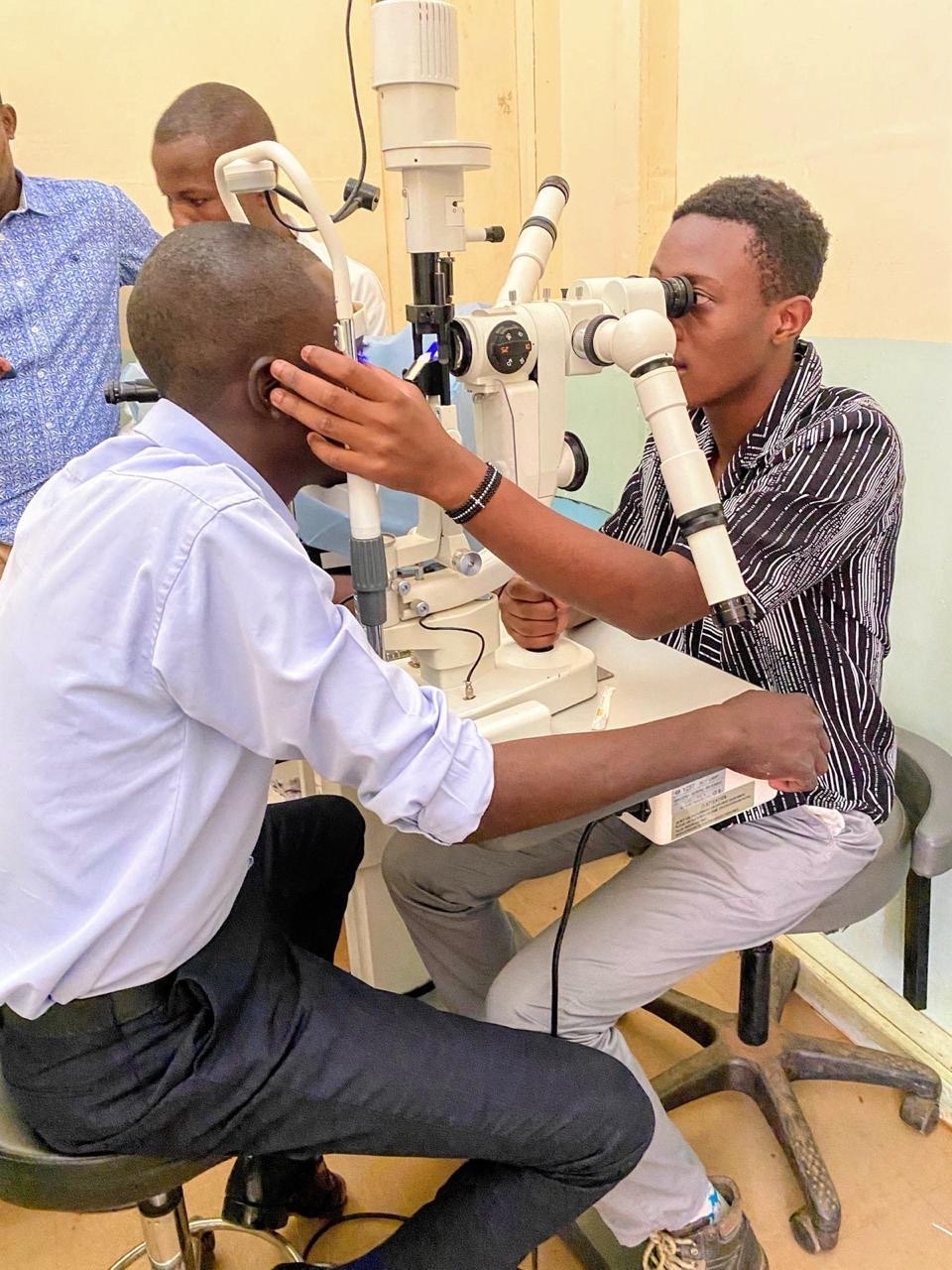
  • Abongo conducts a slit lamp examination on a student at the MMUST AVC Contact Lens Centre.

    Supporting

    Academic partnerships

    We work with universities and training institutions across healthcare, engineering and data science to strengthen research capacity and the eye care evidence base. These partnerships will help us validate, update and strengthen the Vision Access Index as new data and field evidence become available.

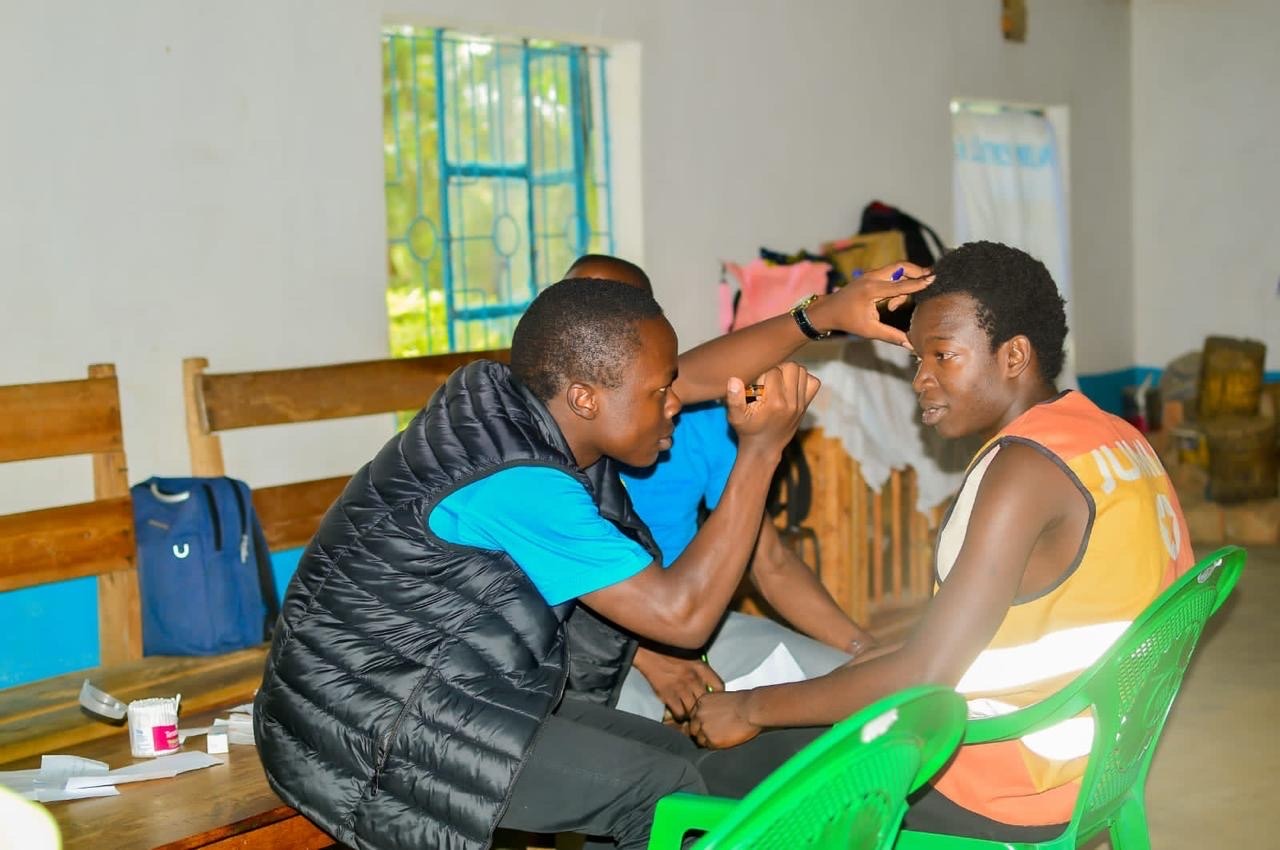
  • Alwenge Yimbo examines a patient during a community eye health screening in Shimanyiro, Kakamega County.

    Supporting

    Clinical outreach

    We plan screening days with county health teams, choosing locations the Index flags as underserved. Each day tests our assumptions on the ground, gives students supervised clinical hours, and keeps the Index tied to the needs people actually have.

See our work

WHO SPECS 2030

Our alignment with the global target

The World Health Organization's SPECS 2030 initiative supports a global target: to raise effective refractive error coverage by 40 percentage points by 2030. We've aligned our work with its five pillars: services, personnel, education, cost and surveillance.*

  1. Services

    Clinical outreach aimed at remote, marginalised and underserved communities.

  2. Personnel

    Through academic partnerships, we strive to build a trained workforce.

  3. Education

    We create public awareness through community outreach programmes and donation drives.

  4. Cost

    To lower the cost of glasses, we use refurbished donated frames.

  5. Surveillance

    The Vision Access Index measures coverage county by county, tracking county-level indicators of vision need and access.

    Our core contribution

*Uwiano Africa is independent and is not affiliated with WHO.

Get involved

Founding partners

We are looking for funding partners, research and academic partners, eye-care delivery partners, and data and policy partners.

Partner with us

Donate

Support screening days, frame refurbishment and the continued strengthening of the Vision Access Index.

Donate

Volunteer

Optometrists, students, data and research specialists, and organisers to help at screening days or with the Index.

Volunteer with us

Need help accessing glasses?

Unahitaji msaada kupata miwani?

Register interest for an upcoming screening. Support is offered subject to location and availability.

Updates

Latest

All updates
A student has an eye exam during a community eye health screening in Shimanyiro, Kakamega County.

Announcement, November 2026

Why we start with evidence

To close the gap in care, Kenya first needs to know which communities are being missed and why. The Vision Access Index sets this out county by county, and we develop it with the people who plan health services.